
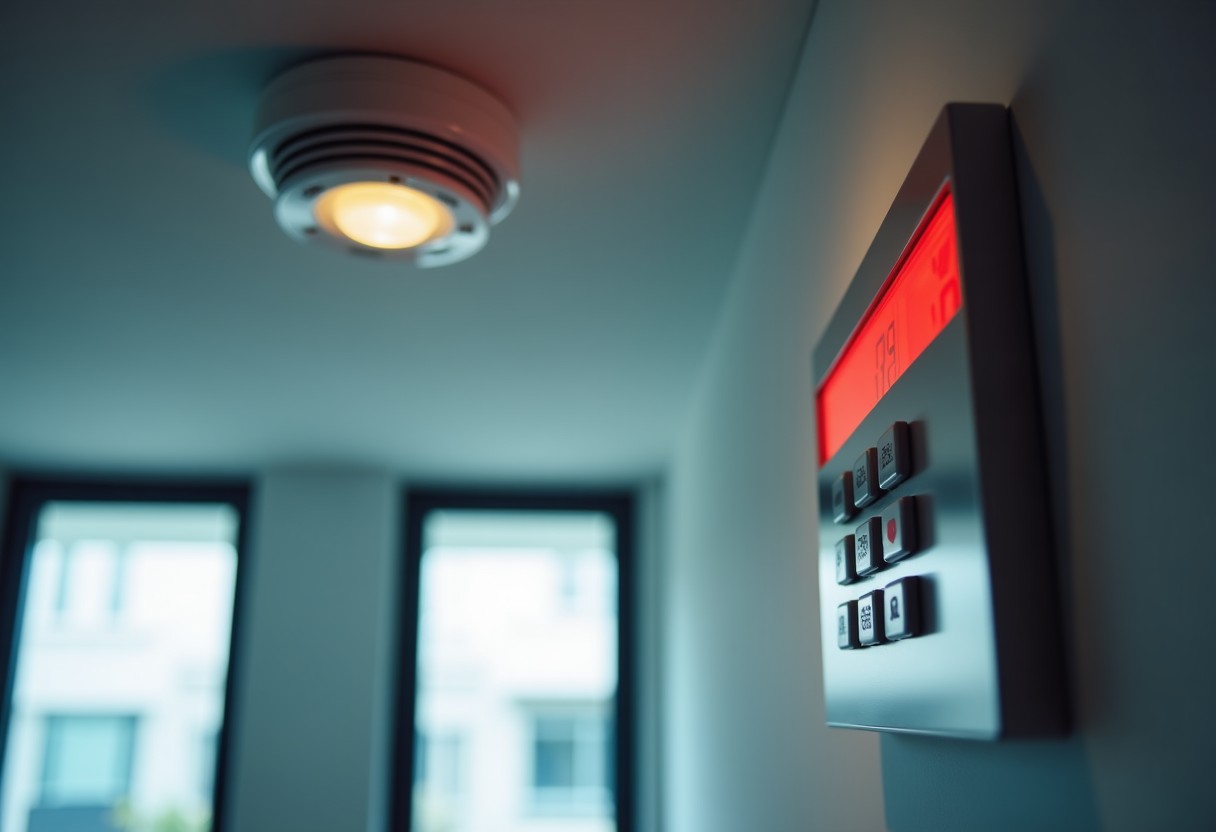
Smoke and heat detectors, alarm panel and early warning: the way to notice a fire before it grows.
The first condition for early response to a fire is early notification. Fire detection and alarm systems provide exactly that: they detect smoke or heat before the flame grows and warn the people in the building. This system is vital especially for workplaces left empty outside working hours.
What does the system consist of?
- Detectors: Smoke detectors sense smoke in the air, while heat detectors sense a rise in temperature.
- Alarm panel: It evaluates signals from the detectors, triggers the alarm and shows which zone it is in.
- Warning devices: Sirens and beacons warn people in the building audibly and visually.
- Call points: Manual call points let people report a fire manually.
Smoke or heat detector?
The two suit different environments. Smoke detectors give a fast warning in areas such as offices and corridors where smoke forms early. Heat detectors reduce false alarms in areas that normally contain smoke/steam, such as kitchens and boiler rooms. The right distribution is planned according to the characteristics of the area.
Why is early warning so important?
Most losses in a fire come not from the flame but from smoke and lost time. Getting notified a few minutes early makes a critical difference for evacuation, for first response and for calling the fire brigade. In an empty workplace, detection prevents a fire from growing unnoticed.
Together with suppression systems
Detection is most effective when it works together with suppression. For example, the gas suppression systems in transformer and panel rooms activate automatically when the detection panel identifies a fire. Likewise, detection integrates with sprinklers and escape guidance.
To determine the right detection and alarm solution for your building, contact us; let us plan the detector type and distribution with an on-site survey.