
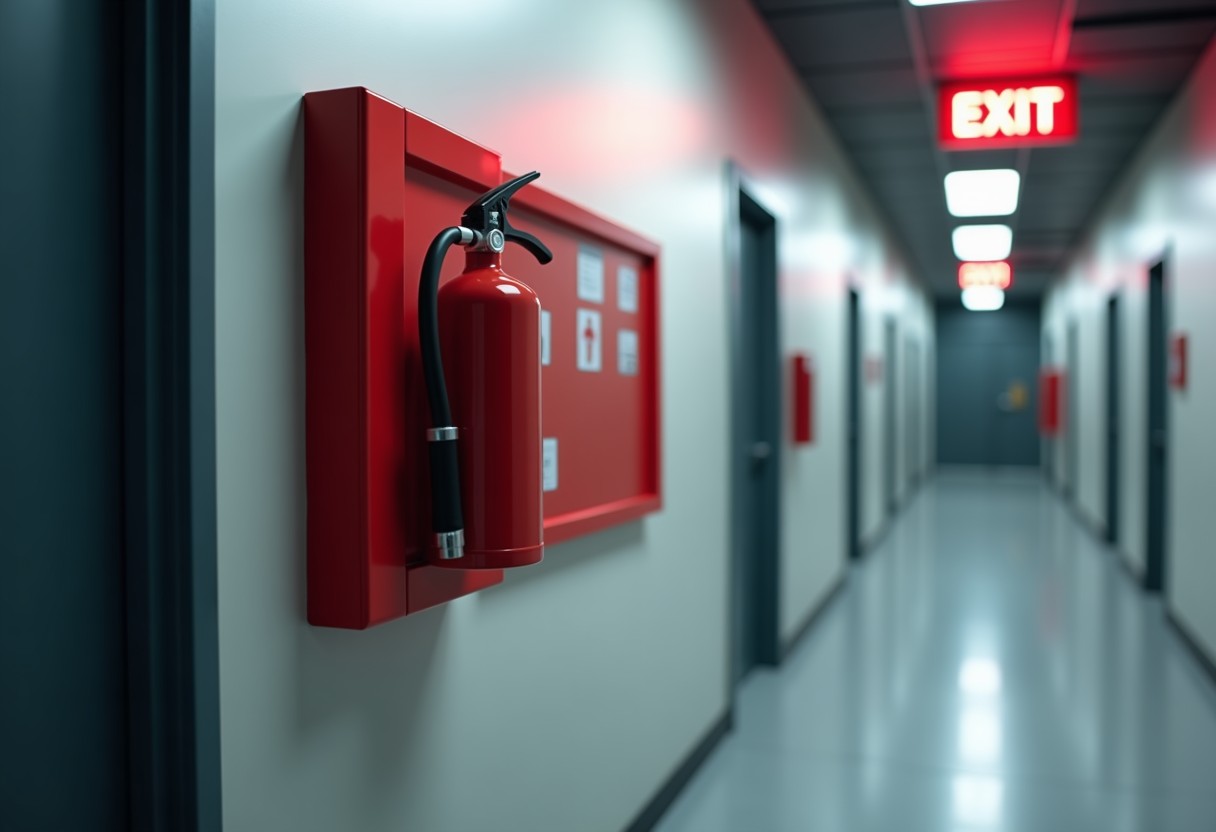
An overview of extinguisher, cabinet and installation requirements by workplace type.
Preparing a workplace against fire is not just about hanging up a single extinguisher. Several complementary systems, from suppression to evacuation, work together. In this article we have gathered, in plain language, the fire equipment your workplace should have and the basic requirements of the regulation.
How many fire extinguishers are required?
The Regulation on Fire Protection of Buildings ties the number of portable extinguishers to the building's hazard class and area:
- In the low hazard class, 1 unit per 500 m²,
- In the medium and high hazard class, 1 unit per 250 m²
on the basis of keeping a suitable-type 6 kg dry chemical powder or equivalent gas extinguisher. In multi-storey buildings each floor is assessed separately; even small floors must have at least one device. It is best to determine the correct number and type with an on-site survey.
Fire cabinet and installation
In buildings above a certain size, an extinguisher alone is not enough; water-based systems come into play. A fire cabinet is an accessible first-response point on every floor, taking its water from the fire installation (pump, riser line, distribution piping). Together they make it possible to fight a fire until the fire brigade arrives.
Detection and early warning
Early response to fire begins with early notification. Smoke and heat detectors and a fire alarm panel let you notice a fire before it grows. A detection system is vital especially for workplaces left empty outside working hours.
Escape, signage and floor marking
Some of the equipment is for evacuation: fire doors, emergency exits and escape routes marked with floor markings let people get out safely in a panic. Tactile surface strips for the visually impaired are also important for an accessible evacuation.
What changes by workplace type
Areas with high fuel, paint or chemical risk need foam suppression; transformer, generator and panel rooms need gas/automatic suppression systems. So the "same package for every workplace" approach is wrong; equipment is chosen according to the area's risk.
In summary
The core equipment list for a basic workplace can be summarised as:
- A sufficient number of the correct type of fire extinguisher
- A fire cabinet and installation where required
- Fire detection and alarm
- Escape route marking, signage and emergency exits
To clarify which equipment your workplace needs, you can get a free survey and written quote.