
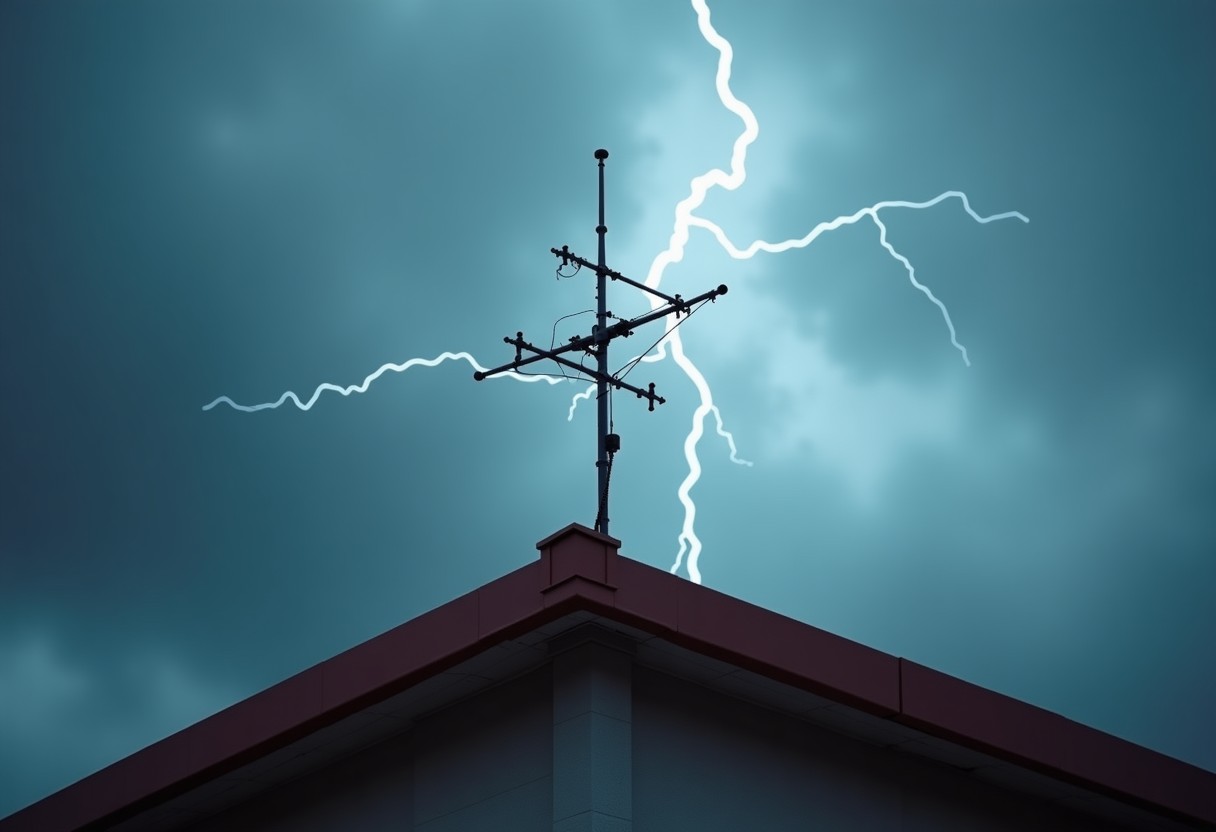
Lightning protection systems, TS EN 62305, annual inspection and earth resistance: what you need to know about lightning rods.
Lightning can cause fire and heavy equipment damage through a direct strike or the overvoltage it produces. A lightning rod (lightning protection system) protects the building by channelling this energy safely to earth. In this article we have gathered what a lightning rod is, which buildings need one, and the inspection obligation.
How does a lightning rod work?
The system consists of three basic parts: the air terminal on the roof, the down conductor that runs down, and the earthing in the ground. Lightning is safely conducted from the air terminal, through the down conductor, to earth; this protects the building's structure and the equipment inside.
Which buildings need one?
The need for lightning protection is determined by a risk assessment based on factors such as the building's height, location, intended use and the risk it contains (flammable/explosive materials, critical equipment). The international standard TS EN 62305 defines this risk analysis, design and installation criteria. Tall structures, industrial facilities and critical public buildings are typical application areas. [CONFIRM: whether it is mandatory for your building is clarified with an on-site risk analysis]
Annual inspection is a legal obligation
As much as installing it, regular inspection matters too. The Regulation on Health and Safety Conditions in the Use of Work Equipment requires the lightning protection system to be inspected and reported by authorised persons at least once a year. TS EN 62305-3 also states that the maximum interval between inspections is one year.
Earth resistance
The effectiveness of the system depends on the quality of the earthing. Under the relevant standards, the earth spreading resistance of a lightning protection system is generally expected to be below 10 Ω. This value is verified and reported by periodic measurement.
Installation and maintenance from one provider
The installation, measurement and annual inspection of the air terminal, down conductor and earthing should be handled as a whole. In our lightning rod and lightning protection service we carry out installation, measurement and periodic inspection together.
To assess your building's lightning protection need, you can request an on-site survey.